What Hotels in Colombia Discover: Real Data from Migrating to an Asksuite Alternative

Gustavo Marval
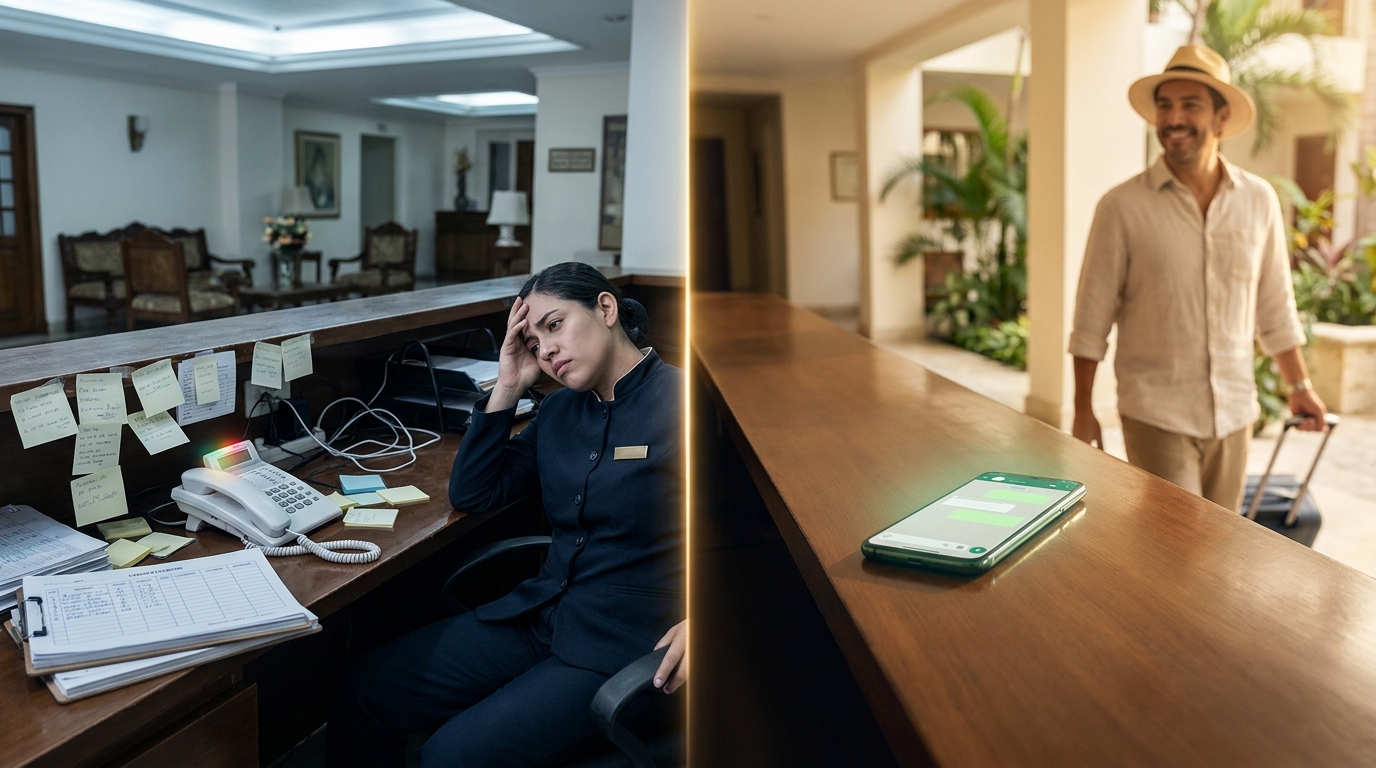
A hotelier at a 30-room boutique in El Poblado, Medellín, reviews their monthly performance report. The chatbot widget on their website is credited with 15 bookings. It sounds good, but something doesn't add up. After manually reviewing their chats, their front desk team handled over 60 confirmed booking requests directly through WhatsApp during the same period. The widget's report wasn't showing the full picture; it was claiming credit for a fraction of the conversions, likely from users who had already decided to book via WhatsApp and were just looking for a final confirmation on the web. This discrepancy is the blind spot many hoteliers in Latin America don't see until they switch tools.
The problem isn't that web widget chatbots are useless, but that they are optimized for a channel that is losing relevance in Colombia's independent hotel market. The belief is that you need an assistant on your website to capture traffic. The reality is that for 80% of potential guests in Colombia, the conversation has already started elsewhere: WhatsApp. Therefore, the real bottleneck isn't the lack of a web assistant, but the friction of forcing a WhatsApp user to complete their booking in an unfamiliar web environment. The right tool shouldn't wait for the guest on the website; it should meet them and close the sale where the conversation is already happening.
The Attribution Myth: Which Tool Converts vs. Which Just Tags Along?
The most misleading metric in hotel automation is the "assisted booking." A web widget, by its nature, specializes in this metric. A potential guest might interact with the chatbot, ask a question, and then proceed to book through the traditional engine. The widget takes credit for that sale, but did it really generate it? In markets like Colombia, where trust is built conversationally, the customer journey is more fluid. Often, the guest discovers the hotel on Instagram, clicks the WhatsApp link, gets their questions answered, and when they are ready to pay, the hotel sends them to the website. The widget at that final point isn't a converter; it's a final hurdle the guest must overcome. A true Asksuite alternative should focus on booking origination, not just last-click attribution. Focusing on the right channel changes the perspective on how a conversational booking engine differs from a traditional one.
This is where the tool's architecture matters. Solutions designed as a website add-on, including many presented as a HiJiffy alternative, inherit this web-centric logic. They aren't built for the native WhatsApp flow, where a guest expects to check availability, get a quote, confirm, and pay without ever leaving the app. Forcing this flow out of WhatsApp breaks the immediacy and trust that the channel promises, leading to significant abandonment right at the final step.
The First 30 Days of Data: What Switching Tools Reveals
When a hotel like our example in Medellín implements a native WhatsApp booking engine, the first month's data is revealing. The migration isn't just a software change; it's an experiment that exposes the true source of their direct bookings. During the first week, the team observes how inquiries that previously required manual intervention are now handled 24/7 by the AI. By the second week, the first 100% automated bookings, payment included, start coming in at 3 AM, a time when the front desk is closed. By the end of the first month, the contrast is stark: the new system doesn't report 15 "assisted" bookings, but 45-50 completed and paid bookings, originated and closed within WhatsApp. This proves the demand was always there, but the old system wasn't equipped to capture it efficiently. Platforms like HotelChatBook demonstrate this principle by managing the entire cycle—from availability query to payment confirmation—without redirecting the guest, keeping the conversation in a single WhatsApp thread. This model is especially powerful for small and medium-sized hotels, as well as for the niche hostel chatbot market, where agility and direct communication are key.
The Channel That Matters in Colombia: Why WhatsApp Dominates the Guest Journey
In Colombia, WhatsApp is not just a messaging app; it's a platform for commerce and trust. Guests expect a human-like interaction, even when talking to a bot. They want the assurance that they can ask a complex question or make a special request and get a coherent answer. That's why a hotel chatbot for WhatsApp that simply answers FAQs and then sends the user to a website fails. True conversion happens when the tool can handle rates, real-time availability, modifications, and, crucially, payment. The success of WhatsApp hotel reservations in the region depends on the technology's ability to replicate and automate the efficiency of a good front desk agent within the chat itself. Ultimately, the goal is to power automated marketing strategies that actually close direct bookings where customers already are.
Validation: What to Measure When Evaluating an Asksuite Alternative
When comparing a web widget solution to a native WhatsApp engine, the KPIs to measure must be different. It's not just about how many conversations occurred, but about metrics that reflect the real business impact.
- Booking Origination Rate: Don't measure how many bookings were "assisted." Measure how many bookings were initiated and completed on the automated channel without human intervention or redirection to another site. This is the metric that indicates if the tool is generating new business or just logging existing demand.
- Conversion Time (from inquiry to payment): In a manual WhatsApp flow, this process can take hours or even days. With a widget, it involves a channel switch. A native engine like a hotel chatbot with WhatsApp payments should reduce this time to under 5 minutes. This speed is critical to avoid losing the guest to competitors, especially during demand spikes that can overwhelm manual capacity.
- Cart Abandonment Rate (or its equivalent): For widgets, it's the abandonment rate on the payment page. For WhatsApp, it's the percentage of guests who confirm they want to book but don't complete the payment. A native tool with integrated payments drastically reduces this figure because it eliminates friction.
For a hotelier seeking an Asksuite alternative, the analysis should focus on what percentage of their real demand (visible in their WhatsApp inbox) can be captured and converted by the tool. If the answer is less than 50%, the tool isn't solving the main problem for the dominant channel.
Looking ahead, the decision of which technology to adopt shouldn't be based on whether you have a web presence, but on where the highest concentration of your guests' purchasing intent lies. For most independent hotels in Colombia and LATAM, that answer is, and will continue to be, WhatsApp. Your task this week is clear: audit your own WhatsApp and count how many direct booking opportunities are handled manually. Then, compare that number with your current chatbot's report. The results will show you exactly where your biggest growth opportunity is. Consider exploring a platform like HotelChatBook, which is designed to turn those WhatsApp conversations into confirmed, paid bookings without ever redirecting the customer.